
The Battery That Rewired the World
Lithium-ion cells did not invent portable electronics. They made them small enough to carry — and they are still the reason electric cars are possible.
6 min readPublished November 1, 2026
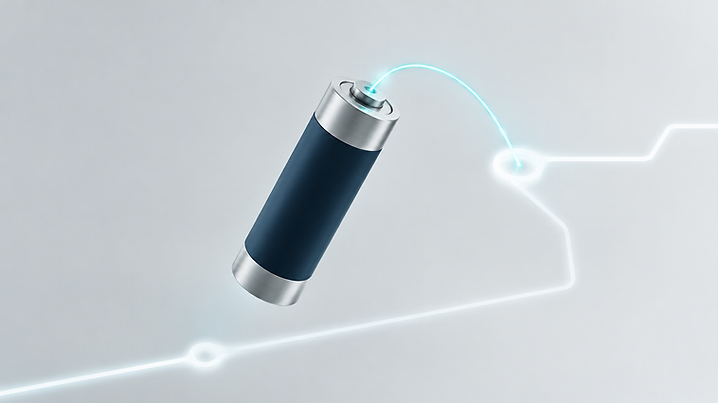
What a battery is doing
A cell stores energy in chemical bonds and releases it by driving electrons through an external circuit. Three numbers decide whether a chemistry is useful: energy per kilogram, how many charge cycles it survives, and how safely it behaves when things go wrong. Every battery advance is a negotiation among those three.
Why lithium won
Lithium is the lightest metal and strongly electropositive, so a lithium-based cell can hold a lot of energy per kilogram. Early attempts were unstable. The commercially decisive design used lithium ions shuttling between a graphite anode and a metal-oxide cathode — a safer arrangement that could be recharged hundreds of times. It reached the market in 1991 and made laptops, then phones, then cars practical.
The part that has not been solved
Charging is the hard problem. Fast charging stresses cells and shortens life; energy density improvements now arrive in single percentage points per year rather than leaps. Recycling is the other open question: recovering lithium, nickel and cobalt economically is still harder than mining them in many places. The chemistry that changed the world is now waiting on materials science and logistics rather than a single invention.
Sources
References point to third-party sources. Esurranty summarises them in its own words; check the original for the full argument.